Speaking with Vampires: Rumor and History in Colonial Africa
White (2000) treats the rumours told in colonial Africa as a source for writing its history.
Omunye umbhalo wokusebenzisana ngalolu limi uhunyushwe ngomshini futhi usabuyekezwa.
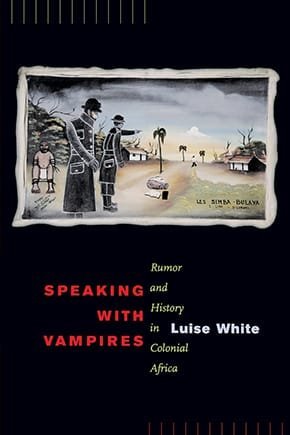
White (2000) treats the rumours told in colonial Africa as a source for writing its history.

E. A. Wallis Budge’s 1922 English translation of the Kebra Nagast, “The Glory of the Kings”, the Ethiopian work on the Queen of Sheba and her son Menyelek.
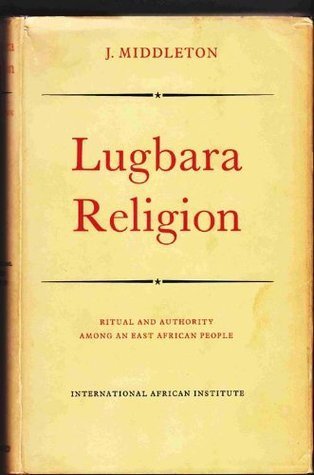
John Middleton’s 1960 study of the religion of the Lugbara of East Africa, a people without kings or chiefs, where authority rests with the heads of families; it covers ancestor rites, oracles, diviners and beliefs about witches.
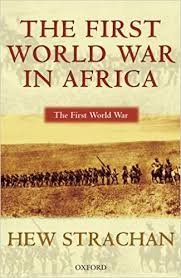
Hew Strachan’s account of the First World War in Germany’s African colonies: Togoland, the Cameroons, South-West Africa and East Africa. It first appeared as a chapter of his larger history of the war.
Mwaura examines foreign aid, trade, study abroad, religion, entertainment and the media in Kenya and other African nations, and asks whether what is offered as “assistance” truly helps.
Covers the ancient civilizations of the continent: Egypt in the age of the pharaohs, Nubia and the kingdom of Kush, Aksum, North Africa in the time of Carthage and Rome, and societies south of the Sahara in the same centuries. It includes the report of the 1974 UNESCO symposium in Cairo on the peopling of ancient Egypt and the deciphering of the Meroitic script, a debate still discussed today.
Follows Africa from the seventh to the eleventh century: the spread of Islam into North Africa and beyond, the growth of trade routes across the Sahara and the Indian Ocean, early states of the West African savanna, Christian Nubia and Ethiopia, and the movements and societies of peoples in central, eastern and southern Africa.
Describes the great states and cities of the twelfth to sixteenth centuries, including the empire of Mali, the rise of Songhay, the Hausa and Kanem-Borno states, the Swahili coast, Ethiopia, the Zimbabwe plateau and the kingdoms of central Africa. It also follows the Maghrib and Egypt, and the first contacts with European navigators at the end of the period.
Examines Africa between the sixteenth and eighteenth centuries, a time of new states, shifting trade and outside pressure. Themes include the Atlantic slave trade and its consequences, Ottoman and Moroccan power in the north, the end of Songhay, the rise of new kingdoms in West and Central Africa, change along the East African coast and in Madagascar, and the societies of southern Africa.
Looks at the nineteenth century up to the 1880s, stressing that Africans were shaping their own history before the European partition. It covers the end of the Atlantic slave trade, new commerce, Islamic reform movements in West Africa, political change in southern Africa, reforms in Egypt and Ethiopia, and growing European interest in the continent.
Correct Connect Africa Foundation · 20B Muyibat Oyefusi Crescent, Omole Estate Phase 1, Ikeja, Lagos, Nigeria · info@ccaf.africa