African Socialism: An Anarchist Critique
An anarchist critique of the African socialism adopted by post-colonial states, including Nkrumah’s, arguing that anarchism is Africa’s way forward.
Parte dei testi dell’interfaccia in questa lingua è stata tradotta automaticamente ed è ancora in revisione.
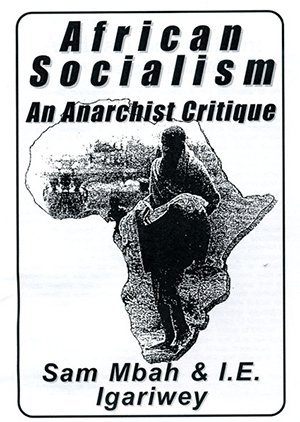
An anarchist critique of the African socialism adopted by post-colonial states, including Nkrumah’s, arguing that anarchism is Africa’s way forward.
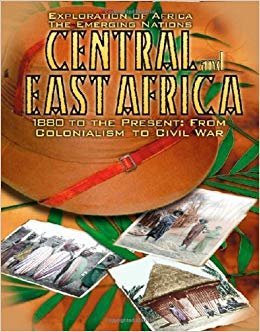
Daniel E. Harmon’s illustrated history of Central and East Africa since 1880, from colonial rule to civil war, in the series Exploration of Africa: The Emerging Nations, with an introduction by Richard Leakey.
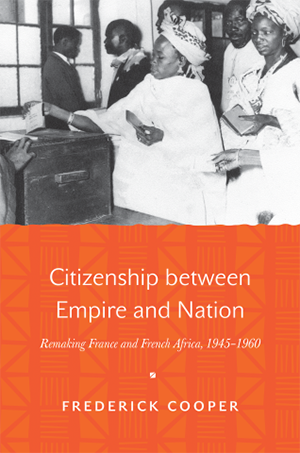
Frederick Cooper’s prize-winning history of 1945 to 1960, when people in France’s African colonies held French citizenship and their leaders explored federation as an alternative to both empire and the nation-state.

Short sayings drawn from Kwame Nkrumah’s speeches, first published in 1967, after the coup that removed him, and later reissued in a “freedom fighters’ edition”.

Kwame Nkrumah’s case for the total liberation and unification of Africa.
In 1954 the Senegalese historian Cheikh Anta Diop published ‘Nations nègres et culture’. In it he challenged Western histories that had justified European imperialism and the idea that Black peoples were inferior, and argued for histories that recognise Africa’s past and its contributions to world history, including his thesis that ancient Egyptian civilisation was African. His work remains influential and his specific claims are still debated by historians and made history a key field of anticolonial thought.
Chief, teacher and president of the African National Congress from 1952, honoured with the Nobel Peace Prize for 1960 “for his non-violent struggle against apartheid”: the first Peace Prize laureate from Africa. Example: he led campaigns of civil disobedience against apartheid laws, inspired by the philosophy of non-violence.
Leader of the Gold Coast’s movement for independence from Britain, who headed Ghana from independence in 1957 until a coup in 1966. Example: his studies in the United States, at Lincoln University and the University of Pennsylvania, where he read the literature of socialism and of nationalism, including Marcus Garvey.
Senegalese historian whose 1954 book Nations nègres et culture challenged histories that had served European imperialism and called for histories recognising Africa’s past and its contributions to the world, including his thesis that ancient Egyptian civilisation was African. His arguments remain influential, and some are still debated by historians. Example: the Sankofa Political Studies lessons…
Kwame Nkrumah (1909–1972), born in Nkroful in the Gold Coast, led the colony’s movement for independence from Britain. In 1957 the Gold Coast became the independent nation of Ghana, and Nkrumah headed the country from independence until he was overthrown by a coup in 1966. He studied in the United States at Lincoln University and the University of Pennsylvania, where he read widely in socialist and nationalist thought, including the work of Marcus Garvey.
Correct Connect Africa Foundation · 20B Muyibat Oyefusi Crescent, Omole Estate Phase 1, Ikeja, Lagos, Nigeria · info@ccaf.africa