The First World War in Africa
Hew Strachan’s account of the First World War in Germany’s African colonies: Togoland, the Cameroons, South-West Africa and East Africa. It first appeared as a chapter of his larger history of the war.
Omnye umbhalo wojongano ngolu lwimi uguqulelwe ngomatshini kwaye usahlolwa.
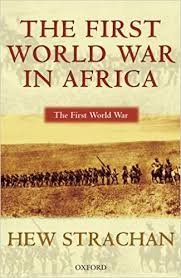
Hew Strachan’s account of the First World War in Germany’s African colonies: Togoland, the Cameroons, South-West Africa and East Africa. It first appeared as a chapter of his larger history of the war.
Follows Africa from the seventh to the eleventh century: the spread of Islam into North Africa and beyond, the growth of trade routes across the Sahara and the Indian Ocean, early states of the West African savanna, Christian Nubia and Ethiopia, and the movements and societies of peoples in central, eastern and southern Africa.
Describes the great states and cities of the twelfth to sixteenth centuries, including the empire of Mali, the rise of Songhay, the Hausa and Kanem-Borno states, the Swahili coast, Ethiopia, the Zimbabwe plateau and the kingdoms of central Africa. It also follows the Maghrib and Egypt, and the first contacts with European navigators at the end of the period.
Examines Africa between the sixteenth and eighteenth centuries, a time of new states, shifting trade and outside pressure. Themes include the Atlantic slave trade and its consequences, Ottoman and Moroccan power in the north, the end of Songhay, the rise of new kingdoms in West and Central Africa, change along the East African coast and in Madagascar, and the societies of southern Africa.
Looks at the nineteenth century up to the 1880s, stressing that Africans were shaping their own history before the European partition. It covers the end of the Atlantic slave trade, new commerce, Islamic reform movements in West Africa, political change in southern Africa, reforms in Egypt and Ethiopia, and growing European interest in the continent.
Tells the story of the European partition and conquest of Africa from about 1880 to 1935 from an African point of view. It gives particular weight to African initiatives and resistance, then examines colonial economies, social and religious change under colonial rule, and the early growth of African nationalism.

Bouwer asks what ideals of manhood and womanhood came out of the Congo’s struggle for independence, and brings women back into the story of Patrice Lumumba’s legacy.
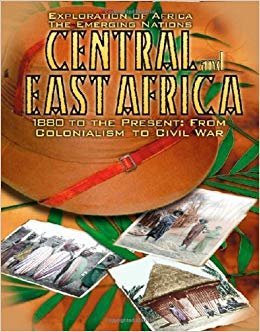
Daniel E. Harmon’s illustrated history of Central and East Africa since 1880, from colonial rule to civil war, in the series Exploration of Africa: The Emerging Nations, with an introduction by Richard Leakey.
The smaller, forest-dwelling elephant of Central and West Africa, listed as Critically Endangered since 2021.
Congolese rumba is a music and couple dance from the cities of the Democratic Republic of the Congo and the Republic of the Congo. It grew from an older dance called nkumba and is part of celebrations, mourning and religious life. In 2021 UNESCO inscribed it on the Representative List of the Intangible Cultural Heritage of Humanity, on the joint nomination of both countries.
Correct Connect Africa Foundation · 20B Muyibat Oyefusi Crescent, Omole Estate Phase 1, Ikeja, Lagos, Nigeria · info@ccaf.africa