Ain Hanech and Ain Boucherit (Algeria): early tools in North Africa
Stone tools and butchered bones near Sétif in Algeria, about 2.4 million years old, show that early tool-makers lived in North Africa almost as early as in East Africa.
Mbind yu jumtukaay yi ci làkk bii, masin moo firi lenn ci, te ñu ngi koy seetaat.
Stone tools and butchered bones near Sétif in Algeria, about 2.4 million years old, show that early tool-makers lived in North Africa almost as early as in East Africa.
Skulls, jaws and stone tools from a former mine west of Marrakesh, dated in 2017 to about 315,000 years, are the oldest fossils attributed to our own species.
Shell beads coloured with ochre, about 82,000 years old, and the genomes of people buried here 15,000 years ago make this Moroccan cave a key site for North Africa’s deep past.
In a basin of Egypt’s Western Desert, people who returned with the summer rains built cattle burials, stone alignments and a small stone circle thousands of years before the pyramids.
The mountains of south-west Libya hold thousands of paintings and engravings, evidence of milk processing in the fifth millennium BCE, and the DNA of a previously unknown North African lineage.
More than 15,000 paintings and engravings on a sandstone plateau in south-eastern Algeria record how the Sahara changed from savanna with lakes to desert.
Above the Nile’s Third Cataract, Kerma was the capital of a powerful Nubian kingdom that rivalled Egypt for a thousand years.
The pyramids of Khufu, Khafre and Menkaure were built by an organised, fed and housed workforce, the achievement of an African state on the Nile.
Covers Africa from the Italian invasion of Ethiopia in 1935 through the Second World War, the struggles for independence and decolonization, and the first decades of independent states. It discusses nation-building, economies, culture and religion, Pan-Africanism and Africa’s place in world affairs.
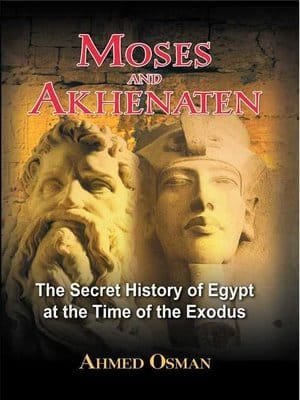
Ahmed Osman argues that Moses and the pharaoh Akhenaten were the same man. Most historians and Egyptologists do not accept this reinterpretation; read it as one author’s thesis.
Correct Connect Africa Foundation · 20B Muyibat Oyefusi Crescent, Omole Estate Phase 1, Ikeja, Lagos, Nigeria · info@ccaf.africa