Religion and Ritual in Ancient Egypt
Emily Teeter reconstructs how ancient Egyptian religion was practised, from objects and inscriptions: who could enter the temples, and what rituals took place there.
Baadhi ya maandishi ya kiolesura katika lugha hii yametafsiriwa kwa mashine na bado yanakaguliwa.

Emily Teeter reconstructs how ancient Egyptian religion was practised, from objects and inscriptions: who could enter the temples, and what rituals took place there.

An Egyptologist’s account of the discovery of Tutankhamen’s tomb, and of Amenism, Atenism and Egyptian monotheism. Catalogues list E. A. Wallis Budge (1923) as author of a book with this title; confirm from the copy.
Covers the ancient civilizations of the continent: Egypt in the age of the pharaohs, Nubia and the kingdom of Kush, Aksum, North Africa in the time of Carthage and Rome, and societies south of the Sahara in the same centuries. It includes the report of the 1974 UNESCO symposium in Cairo on the peopling of ancient Egypt and the deciphering of the Meroitic script, a debate still discussed today.
Follows Africa from the seventh to the eleventh century: the spread of Islam into North Africa and beyond, the growth of trade routes across the Sahara and the Indian Ocean, early states of the West African savanna, Christian Nubia and Ethiopia, and the movements and societies of peoples in central, eastern and southern Africa.
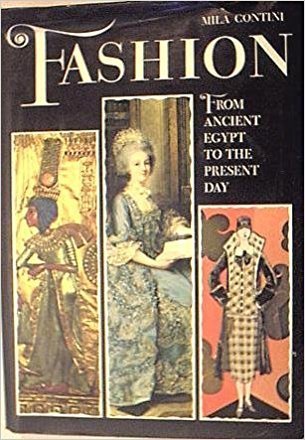
A history of dress from ancient Egypt to modern times. Catalogues list a book with this title by Mila Contini (1965); the author and edition of this copy still need to be confirmed.
Describes the great states and cities of the twelfth to sixteenth centuries, including the empire of Mali, the rise of Songhay, the Hausa and Kanem-Borno states, the Swahili coast, Ethiopia, the Zimbabwe plateau and the kingdoms of central Africa. It also follows the Maghrib and Egypt, and the first contacts with European navigators at the end of the period.
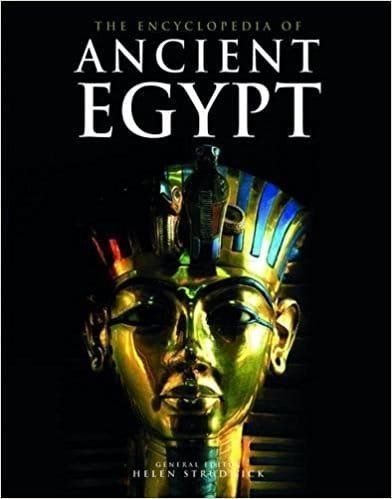
An illustrated encyclopedia, with more than 1,500 photographs and drawings, of the civilisation that flourished in Egypt for over 3,000 years.
Examines Africa between the sixteenth and eighteenth centuries, a time of new states, shifting trade and outside pressure. Themes include the Atlantic slave trade and its consequences, Ottoman and Moroccan power in the north, the end of Songhay, the rise of new kingdoms in West and Central Africa, change along the East African coast and in Madagascar, and the societies of southern Africa.
Looks at the nineteenth century up to the 1880s, stressing that Africans were shaping their own history before the European partition. It covers the end of the Atlantic slave trade, new commerce, Islamic reform movements in West Africa, political change in southern Africa, reforms in Egypt and Ethiopia, and growing European interest in the continent.
Tells the story of the European partition and conquest of Africa from about 1880 to 1935 from an African point of view. It gives particular weight to African initiatives and resistance, then examines colonial economies, social and religious change under colonial rule, and the early growth of African nationalism.
Correct Connect Africa Foundation · 20B Muyibat Oyefusi Crescent, Omole Estate Phase 1, Ikeja, Lagos, Nigeria · info@ccaf.africa