Pinnacle Point (South Africa): shellfish, pigment and heated stone
Caves near Mossel Bay show people eating shellfish and using red ochre about 164,000 years ago, and later heating stone to make it easier to work.
A small cave on the southern Cape coast holds engraved ochre, shell beads, an ochre-processing kit and a drawing made about 73,000 years ago, among the earliest evidence of symbolic thought.
Where the Limpopo meets the Shashe, Mapungubwe was the capital of southern Africa’s first known kingdom, whose rulers lived apart on a hill, traded gold and ivory to the Indian Ocean, and were buried with the golden rhinoceros.
Four hills rising from the Kalahari hold more than 4,500 rock paintings and remain a sacred place for the San and Hambukushu peoples.
At a spring in the Kunene region, hunter-gatherers carved more than 2,000 images of animals, footprints and people, one of Africa’s largest groups of rock engravings.
Covers Africa from the Italian invasion of Ethiopia in 1935 through the Second World War, the struggles for independence and decolonization, and the first decades of independent states. It discusses nation-building, economies, culture and religion, Pan-Africanism and Africa’s place in world affairs.
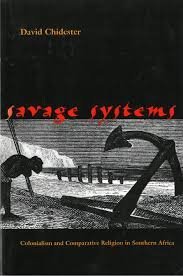
Not a history of beliefs, but a critical study of how the very categories of “religion” and “religions” were formed on contested colonial frontiers through the practice of comparative religion.
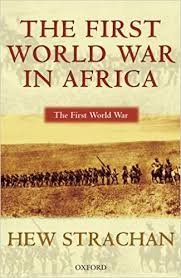
Hew Strachan’s account of the First World War in Germany’s African colonies: Togoland, the Cameroons, South-West Africa and East Africa. It first appeared as a chapter of his larger history of the war.
Follows Africa from the seventh to the eleventh century: the spread of Islam into North Africa and beyond, the growth of trade routes across the Sahara and the Indian Ocean, early states of the West African savanna, Christian Nubia and Ethiopia, and the movements and societies of peoples in central, eastern and southern Africa.
Describes the great states and cities of the twelfth to sixteenth centuries, including the empire of Mali, the rise of Songhay, the Hausa and Kanem-Borno states, the Swahili coast, Ethiopia, the Zimbabwe plateau and the kingdoms of central Africa. It also follows the Maghrib and Egypt, and the first contacts with European navigators at the end of the period.
Correct Connect Africa Foundation · 20B Muyibat Oyefusi Crescent, Omole Estate Phase 1, Ikeja, Lagos, Nigeria · info@ccaf.africa