Body, Sexuality and Gender
The opening volume of the series Versions and Subversions in African Literatures, which sets out to leave old debates behind and open new paths in African literature, here through the body, sexuality and gender.
Parte do texto da interface nesta língua foi traduzida automaticamente e ainda está a ser revista.

The opening volume of the series Versions and Subversions in African Literatures, which sets out to leave old debates behind and open new paths in African literature, here through the body, sexuality and gender.

Florence Stratton places African women writers at the heart of African literature, aiming for a fuller definition of the contemporary African literary tradition, one that includes women.
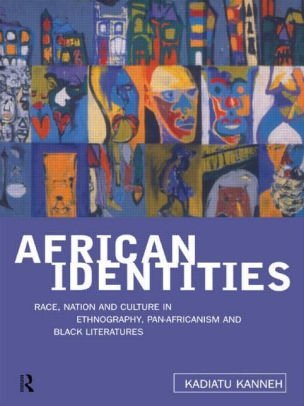
Kadiatu Kanneh explores the meanings history has given to “Africa” and “Blackness”, using literature, autobiography, ethnography and historical documents.
In 1954 the Senegalese historian Cheikh Anta Diop published ‘Nations nègres et culture’. In it he challenged Western histories that had justified European imperialism and the idea that Black peoples were inferior, and argued for histories that recognise Africa’s past and its contributions to world history, including his thesis that ancient Egyptian civilisation was African. His work remains influential and his specific claims are still debated by historians and made history a key field of anticolonial thought.
Akan is the name of a group of peoples of the Guinea Coast who speak Akan languages, part of the Kwa branch of the Niger-Congo family. They include speakers of Asante (Ashanti), Fante, Akyem, Brong, Baule, Anyi and other languages. Most Akan people live in Ghana, where they settled in successive waves between the 11th and 18th centuries; others live in eastern Côte d’Ivoire and parts of Togo. Traditional Akan society is organised in matrilineal clans.

The third Sankofa Youth Journal (November 2021): Black history, Pan-Africanism, rediscovering African identity, female traditional chieftaincy, tales by moonlight and more.
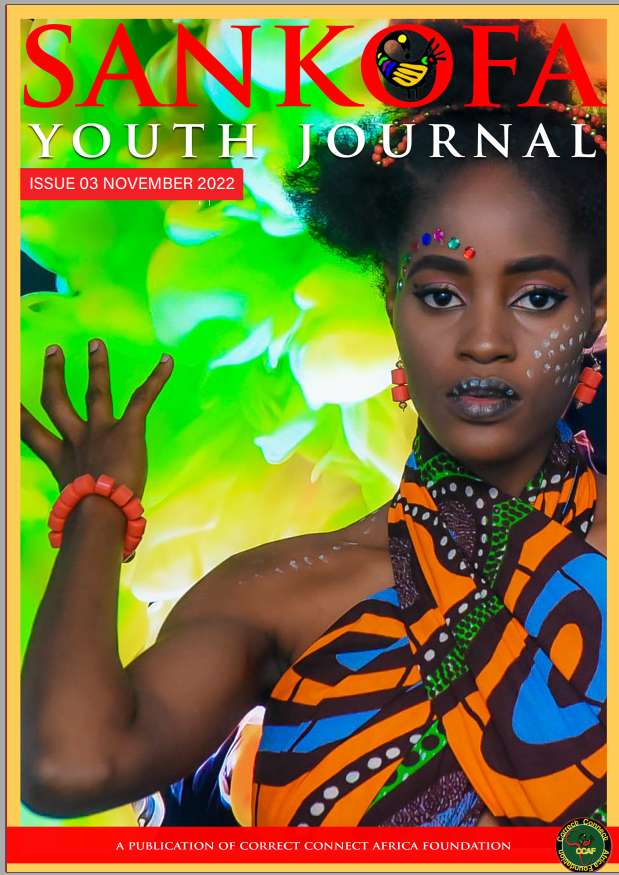
The fourth Sankofa Youth Journal (November 2022), committed to a new education for a new Africa: African history, African classics and humanities, and more.

The first Sankofa Youth Journal (October 2019), CCAF’s publication helping young Africans to know their origins and return to their roots.
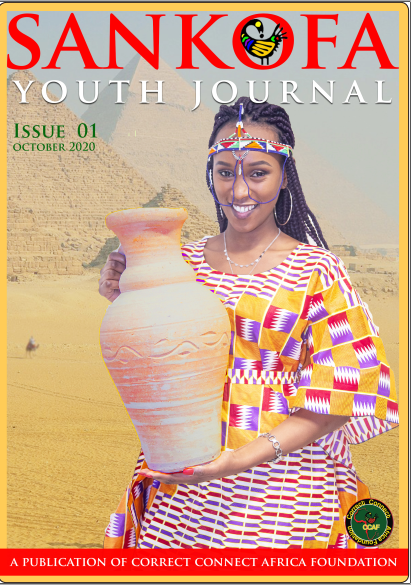
The second Sankofa Youth Journal (2020), continuing CCAF’s work to restore the value of African identity and of Africa’s contribution to education, culture and invention.
How the African Union defines the African diaspora, and why it invites the diaspora to help build the Union.
Correct Connect Africa Foundation · 20B Muyibat Oyefusi Crescent, Omole Estate Phase 1, Ikeja, Lagos, Nigeria · info@ccaf.africa