African Youth Charter 2006
The African Union’s charter for young people, endorsed in Banjul on 2 July 2006 and in force since 8 August 2009: the political and legal framework for youth across Africa.
Parte do texto da interface nesta língua foi traduzida automaticamente e ainda está a ser revista.

The African Union’s charter for young people, endorsed in Banjul on 2 July 2006 and in force since 8 August 2009: the political and legal framework for youth across Africa.

Kwame Nkrumah’s case for the total liberation and unification of Africa.
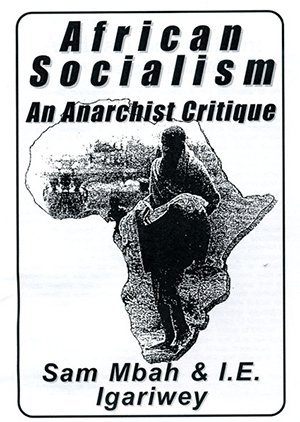
An anarchist critique of the African socialism adopted by post-colonial states, including Nkrumah’s, arguing that anarchism is Africa’s way forward.
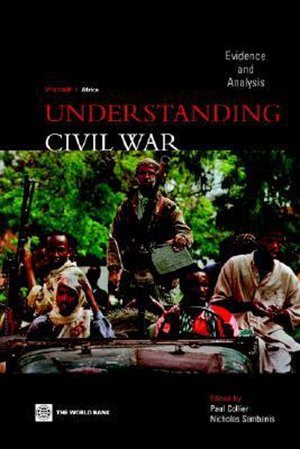
World Bank case studies edited by Paul Collier and Nicholas Sambanis (2005), testing an economic model of why civil wars begin; the Africa volume covers countries such as Burundi, Congo, Nigeria, Kenya, Mozambique and Sudan. Which volume this copy is still needs checking.
Kwame Nkrumah (1909–1972), born in Nkroful in the Gold Coast, led the colony’s movement for independence from Britain. In 1957 the Gold Coast became the independent nation of Ghana, and Nkrumah headed the country from independence until he was overthrown by a coup in 1966. He studied in the United States at Lincoln University and the University of Pennsylvania, where he read widely in socialist and nationalist thought, including the work of Marcus Garvey.
Albert Lutuli (1898–1967), president of the African National Congress from 1952, was awarded the Nobel Peace Prize for 1960 ‘for his non-violent struggle against apartheid’ and received it in 1961. The Nobel Prize organisation calls him Africa’s first Peace Prize laureate. Born in Bulawayo in present-day Zimbabwe and living in South Africa, he was a chief, teacher and trade unionist who led a campaign of civil disobedience against apartheid laws.
The African Union states that it is made up of 55 member states, representing all the countries of the continent. The number includes the Sahrawi Arab Democratic Republic, an AU member since 1982 whose territory, Western Sahara, is disputed and which is not a member of the United Nations. That is why African UN member states number 54 while the AU counts 55. The AU succeeded the Organisation of African Unity, founded in 1963.
Wangari Maathai (1940–2011), born in Nyeri, Kenya, received the Nobel Peace Prize in 2004 ‘for her contribution to sustainable development, democracy and peace’. The Nobel Prize organisation records that she was the first African woman to receive the Peace Prize. In 1977 she started the Green Belt Movement, which encouraged women to plant trees against deforestation and helped plant over thirty million trees. She was also a leading voice for democracy in Kenya.
Built by Kenyan bloggers in 2008, Ushahidi turns reports from phones into live crisis maps used around the world.
How the African Union defines the African diaspora, and why it invites the diaspora to help build the Union.
Correct Connect Africa Foundation · 20B Muyibat Oyefusi Crescent, Omole Estate Phase 1, Ikeja, Lagos, Nigeria · info@ccaf.africa