Fashion: From Ancient Egypt to the Present Day
A history of dress from ancient Egypt to modern times. Catalogues list a book with this title by Mila Contini (1965); the author and edition of this copy still need to be confirmed.
Parte dei testi dell’interfaccia in questa lingua è stata tradotta automaticamente ed è ancora in revisione.
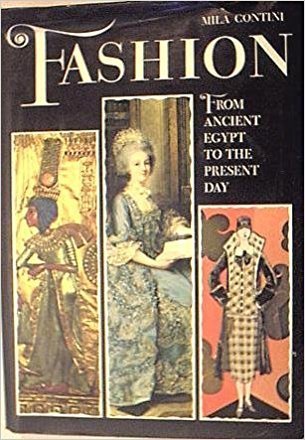
A history of dress from ancient Egypt to modern times. Catalogues list a book with this title by Mila Contini (1965); the author and edition of this copy still need to be confirmed.

Essays edited by Toyin Falola and Danielle Sanchez on Africa’s place in twenty-first-century world politics, a role that has received too little attention, seen through African culture.

The catalogue of the Metropolitan Museum of Art’s 1969 exhibition of works from the Museum of Primitive Art, with its African section by Tamara Northern and Robert Goldwater.

Scholars and activists explore African indigenous knowledge systems across many disciplines, and how such knowledge is produced, shared and developed.
The land between the Nile and Atbara rivers in present-day Sudan was the heartland of the Kingdom of Kush, a major power from the 8th century BCE to the 4th century CE. Its rulers governed Egypt for close to a century. From the 3rd century BCE, Meroë was the royal city and the main royal burial place, with pyramids, temples, palaces and water-management works. Kush exchanged art, architecture, religion and language with the Mediterranean world and inner Africa.
In the mountains of Ethiopia, eleven medieval churches were hewn out of the living rock rather than built from blocks: doors, windows, columns and roofs were all cut from the same stone, with trenches and passages between them. Their making is attributed to King Lalibela, who sought to create a ‘New Jerusalem’; UNESCO dates them to the 12th–13th centuries. Lalibela remains a living place of Ethiopian Christian pilgrimage.
Aksum, in the highlands of northern Ethiopia, was the centre of a kingdom that UNESCO dates from the 1st to the 8th century CE. It traded across the Red Sea through the port of Adulis and was among the most powerful states between the Eastern Roman Empire and Persia. Its monuments include carved stone stelae, the tallest still standing over 23 metres. Stone inscriptions of King Ezana from the 4th century use Greek, Sabaean and Ge’ez, the classical language of Ethiopia.
Great Zimbabwe, near Masvingo in present-day Zimbabwe, is the stone-built capital of a Shona state. UNESCO dates its building to about 1100–1450 CE. The site has three parts: the Hill Ruins, long considered a royal centre; the Great Enclosure, an elliptical wall of cut granite from the 14th century; and the Valley Ruins. Great Zimbabwe was an important trading centre. A legend linking it to the Queen of Sheba is only a legend: the city is the work of the Shona people’s ancestors.
Congolese rumba is a music and couple dance from the cities of the Democratic Republic of the Congo and the Republic of the Congo. It grew from an older dance called nkumba and is part of celebrations, mourning and religious life. In 2021 UNESCO inscribed it on the Representative List of the Intangible Cultural Heritage of Humanity, on the joint nomination of both countries.
Akan is the name of a group of peoples of the Guinea Coast who speak Akan languages, part of the Kwa branch of the Niger-Congo family. They include speakers of Asante (Ashanti), Fante, Akyem, Brong, Baule, Anyi and other languages. Most Akan people live in Ghana, where they settled in successive waves between the 11th and 18th centuries; others live in eastern Côte d’Ivoire and parts of Togo. Traditional Akan society is organised in matrilineal clans.
Correct Connect Africa Foundation · 20B Muyibat Oyefusi Crescent, Omole Estate Phase 1, Ikeja, Lagos, Nigeria · info@ccaf.africa