The First World War in Africa
Hew Strachan’s account of the First World War in Germany’s African colonies: Togoland, the Cameroons, South-West Africa and East Africa. It first appeared as a chapter of his larger history of the war.
Ein Teil der Oberflächentexte in dieser Sprache wurde maschinell übersetzt und wird noch geprüft.
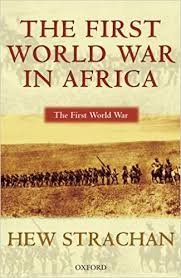
Hew Strachan’s account of the First World War in Germany’s African colonies: Togoland, the Cameroons, South-West Africa and East Africa. It first appeared as a chapter of his larger history of the war.

Cheikh Anta Diop’s first book in English (1974), arguing from archaeological and anthropological evidence that the civilisation of ancient Egypt was African.

E. A. Wallis Budge’s 1922 English translation of the Kebra Nagast, “The Glory of the Kings”, the Ethiopian work on the Queen of Sheba and her son Menyelek.

An Egyptologist’s account of the discovery of Tutankhamen’s tomb, and of Amenism, Atenism and Egyptian monotheism. Catalogues list E. A. Wallis Budge (1923) as author of a book with this title; confirm from the copy.
The opening volume asks how African history can be known at all. It weighs the different kinds of evidence (written documents, oral tradition, archaeology, linguistics and other sciences) and argues for treating African sources on their own terms. Its second part surveys African prehistory, from the earliest human ancestors to the beginnings of farming, metalworking and settled societies across the continent.
Covers the ancient civilizations of the continent: Egypt in the age of the pharaohs, Nubia and the kingdom of Kush, Aksum, North Africa in the time of Carthage and Rome, and societies south of the Sahara in the same centuries. It includes the report of the 1974 UNESCO symposium in Cairo on the peopling of ancient Egypt and the deciphering of the Meroitic script, a debate still discussed today.
Follows Africa from the seventh to the eleventh century: the spread of Islam into North Africa and beyond, the growth of trade routes across the Sahara and the Indian Ocean, early states of the West African savanna, Christian Nubia and Ethiopia, and the movements and societies of peoples in central, eastern and southern Africa.
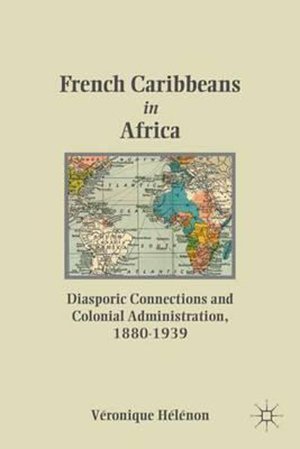
Véronique Hélénon’s study of French Caribbean people who served in France’s colonial administration in Africa from 1880 to 1939, drawing on official records, newspapers and interviews.
Describes the great states and cities of the twelfth to sixteenth centuries, including the empire of Mali, the rise of Songhay, the Hausa and Kanem-Borno states, the Swahili coast, Ethiopia, the Zimbabwe plateau and the kingdoms of central Africa. It also follows the Maghrib and Egypt, and the first contacts with European navigators at the end of the period.
Examines Africa between the sixteenth and eighteenth centuries, a time of new states, shifting trade and outside pressure. Themes include the Atlantic slave trade and its consequences, Ottoman and Moroccan power in the north, the end of Songhay, the rise of new kingdoms in West and Central Africa, change along the East African coast and in Madagascar, and the societies of southern Africa.
Correct Connect Africa Foundation · 20B Muyibat Oyefusi Crescent, Omole Estate Phase 1, Ikeja, Lagos, Nigeria · info@ccaf.africa