Encyclopedia of African Religion
Edited by Molefi Kete Asante and Ama Mazama, the first comprehensive work to bring together the ideas, concepts and long essays on African religion.

Edited by Molefi Kete Asante and Ama Mazama, the first comprehensive work to bring together the ideas, concepts and long essays on African religion.

Yvonne Chireau traces Conjure, the African American tradition of healing and harming that grew from African, European and American elements, from slavery into the twentieth century.
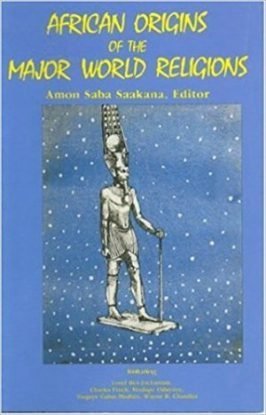
Essays edited by Amon Saba Saakana (Karnak House, 1988), with Yosef Ben-Jochannan, Charles Finch and Modupe Oduyoye, on monotheism, Judaism, Christianity, African traditional religion, language and Buddhism, from an African-centred viewpoint.
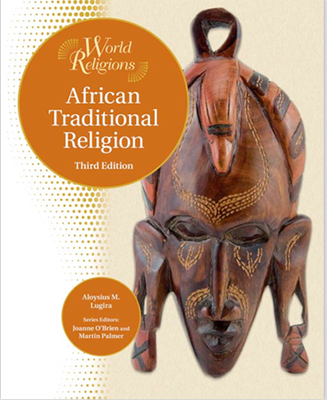
Aloysius Lugira introduces African traditional religion, placing it among the faiths and spiritual traditions that have shaped human history and that more than half the world practises today.

Bennett shows how Africans, free and enslaved, in colonial Mexico, home to the largest such population in the New World, used the legal institutions of a Spanish Catholic society to make their way.
Timbuktu, in present-day Mali at the edge of the Sahara, was an intellectual and spiritual capital in the 15th and 16th centuries, with the Sankore university and many Qur’anic schools. It was also a market where salt, gold, cattle, grain and manuscripts were traded. Its three great mosques, Djingareyber, Sankore and Sidi Yahia, recall this golden age. UNESCO notes that the monuments, though regularly restored, are threatened by desertification.
In the mountains of Ethiopia, eleven medieval churches were hewn out of the living rock rather than built from blocks: doors, windows, columns and roofs were all cut from the same stone, with trenches and passages between them. Their making is attributed to King Lalibela, who sought to create a ‘New Jerusalem’; UNESCO dates them to the 12th–13th centuries. Lalibela remains a living place of Ethiopian Christian pilgrimage.
Masks, dances and chants in Yoruba that honour mothers, from the Yoruba-Nago of Benin, Nigeria and Togo.
A vast oral literature of 256 odu and their verses, kept by babalawo priests in Nigeria and the diaspora.
Correct Connect Africa Foundation · 20B Muyibat Oyefusi Crescent, Omole Estate Phase 1, Ikeja, Lagos, Nigeria · info@ccaf.africa